
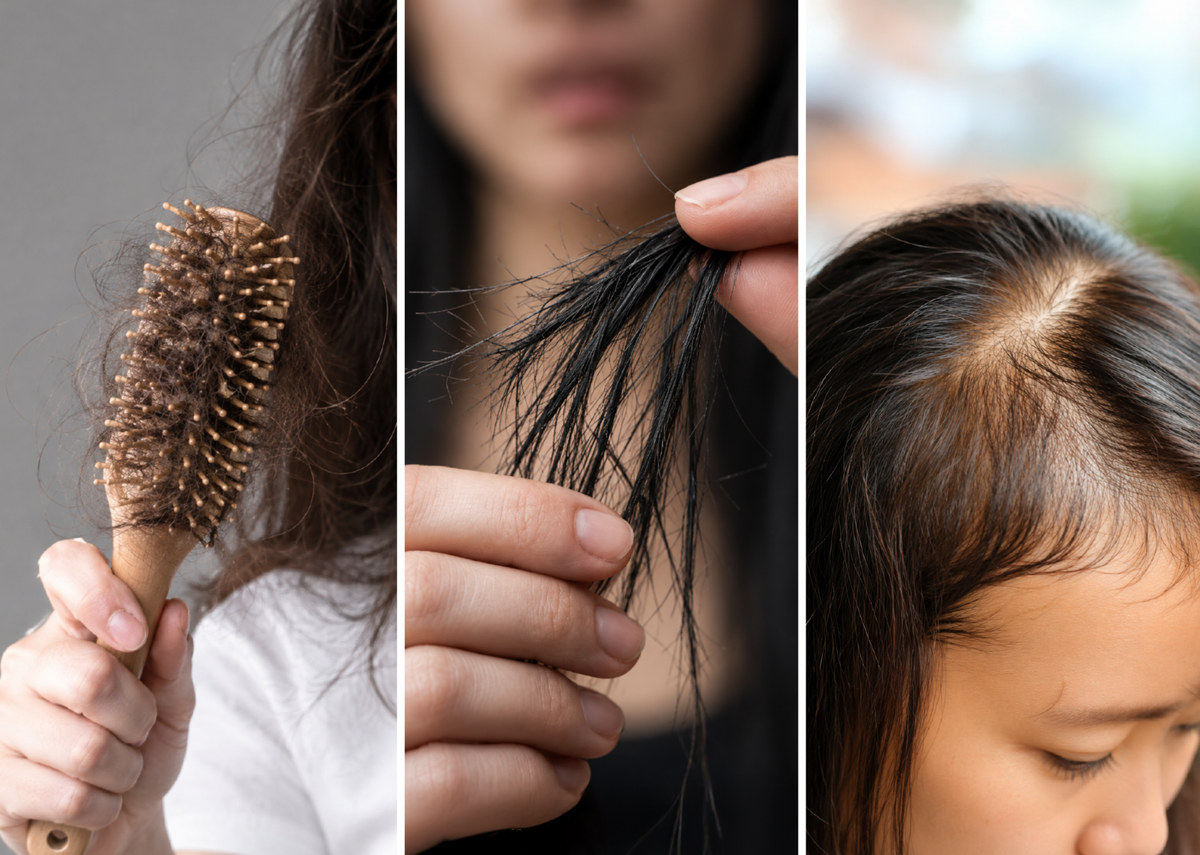
Hair problems have a strange way of looking the same in the beginning. More hair shows up on the pillow, a few strands collect in the shower drain, and suddenly it feels like something is wrong. The difficult part is that not every hair concern is actually hair fall.
That is where the confusion usually begins. A person may think hair is falling when it is actually snapping halfway. Someone else may worry about hair fall when the real issue is that the hair is becoming thinner over time. They can happen together, but they are not the same thing.
Understanding hair fall vs hair breakage is less about finding the perfect name and more about noticing what the hair is quietly showing every day.
| Comparison Metric | Hair Fall | Hair Breakage | Hair Thinning |
|---|---|---|---|
| What Happens | Hair sheds from the root | Hair snaps along the shaft | Hair density reduces over time |
| What You May Notice | More hair on pillow, comb, or shower drain | Short, uneven pieces, frizz, or split ends | Smaller ponytail, wider parting, or visible scalp |
| Common Clue | Small white bulb at one end | No white bulb; broken or frayed strand | Gradual loss of volume |
Why These Three Hair Problems Feel So Similar
Hair grows, rests, sheds, and grows again. That cycle keeps repeating, so seeing some strands fall is completely expected. The problem is that broken hair also ends up on the floor, and thinning hair often starts with shedding that looks normal.
That is why people often ask why is my hair thinning before knowing what is actually happening.
Even at Prismos Beauty, this confusion comes up often because the signs overlap in everyday life.
What Hair Fall Actually Looks Like
Hair fall means hair comes out from the root. The strand leaves the scalp as part of the natural shedding cycle or because something has disrupted that cycle.
A simple clue is the tiny white bulb at one end of the strand. That usually means the hair has shed from the root instead of breaking.
People notice it while washing, combing, or even running fingers through dry hair. Stress, illness, hormones, pollution, and scalp problems can all increase shedding.
A common question is how much hair fall is normal per day. Around 50 to 100 strands a day is generally considered normal, though wash days often make it look like more because a few days of shedding come out together.
What Hair Breakage Looks Like Instead
Hair breakage is different because the strand snaps somewhere in the middle instead of coming out from the root.
The broken pieces are usually shorter and uneven. Dryness, heat styling, colouring, tight hairstyles, and chemical treatments often weaken the hair until it breaks.
This is where how to tell if hair is breaking or falling becomes easier. If there is no white bulb and the strand looks frayed or snapped, it is more likely breakage than hair fall.
Breakage also makes the ends look thinner even when the roots still seem healthy.
Prismos Beauty believes stronger strands matter just as much as healthier roots because weak hair breaks long before it reaches its full length.
What Hair Thinning Feels Like Over Time
Hair thinning is usually slower and easier to miss.
The ponytail starts feeling smaller, the scalp becomes more visible near the parting, and hair loses volume over time. That is the biggest difference between hair fall and hair thinning.
Hair fall is about shedding more strands than usual. Hair thinning is about fewer or finer strands growing back over time. Genetics, hormones, nutritional deficiencies, stress, and scalp health can all play a role.
Quick Strand Check: Falling, Breaking, Or Thinning?
Before panicking, look at the strands closely.
- Long strand with a small white bulb: This usually points to hair fall from the root.
- Short, uneven strand with no bulb: This usually points to hair breakage.
- Less volume over months: This may point to gradual hair thinning.
- Wider parting or visible scalp: This can suggest reduced density rather than simple breakage.
- Frizz, split ends, and rough texture: These usually indicate strand damage.
How To Tell What Your Hair Is Trying To Say
Sometimes the smallest clues are the most useful.
- Check the strand length: Full-length strands usually suggest hair fall, while short pieces suggest breakage.
- Look for the white bulb: A small white bulb at the end often means the hair has shed from the root.
- Notice your hair volume: A smaller ponytail or wider parting over time may point towards thinning.
- Feel the texture: Roughness, split ends, and frizz often suggest breakage.
- Watch the pattern: Sudden shedding, gradual thinning, and snapping at the ends usually need different care approaches.
Why Hair Can Be Falling and Breaking Together
This is more common than it seems.
Stress can increase shedding while dry, damaged hair continues to snap. Colouring, heat styling, or an unhealthy scalp can also lead to both problems at once.
That is why hair fall vs hair breakage is not always an either-or question. Sometimes the scalp needs care while the hair lengths need strengthening too.
Common Causes At A Glance
| Concern | Common Causes |
|---|---|
| Hair fall | Stress, hormonal changes, illness, nutritional gaps, scalp issues, medication changes, pollution |
| Hair breakage | Heat styling, colouring, bleaching, chemical treatments, tight hairstyles, rough brushing, dryness |
| Hair thinning | Genetics, hormones, ageing, nutritional deficiencies, long-term stress, poor scalp health |
What Should You Focus On First?
| If You Notice | Focus On |
|---|---|
| More full-length strands falling | Scalp care, stress, nutrition, sleep, and hair cycle support |
| Short broken pieces | Strand strengthening, less heat styling, gentle detangling, and moisture |
| Gradual loss of volume | Scalp health, nutrition, hormonal factors, and professional advice if it continues |
| Both shedding and breakage | Care for the scalp and hair lengths together |
How We At Prismos Beauty Support Healthier Hair
At Prismos Beauty, we know hair concerns rarely come alone. Hair fall, breakage, thinning, dandruff, and dryness often happen together, so we focus on caring for both the scalp and the strands.
Prismos Beauty Fallcure Hair Oil is a lightweight, non-sticky blend of 29 traditional Ayurvedic herbs, 3 virgin oils, and onion and ginger extracts. Hero ingredients like Amla, Bhringraj, Hibiscus, Aloe Vera, Fenugreek, Neem, Onion Extract, and Ginger Extract help nourish the scalp, strengthen weak roots, reduce breakage, and support healthier-looking hair with regular use.
Our formula is suitable for men and women across all hair types, including straight, curly, oily, dry, and chemically treated hair. Regular scalp massage helps improve texture, reduce dryness, support thinning hair, and leave the scalp nourished without a greasy feel.
The Difference Becomes Clearer When You Slow Down
Hair has a quiet way of showing what it needs. Looking closely at the strands, noticing where they are coming from, and paying attention to changes in volume often gives better answers than counting every hair in the shower.
The difference between hair fall and hair thinning matters because they do not always need the same approach. Breakage needs stronger strands, hair fall needs support for the scalp and hair cycle, and thinning often needs patience while understanding the reason behind it.
Once that difference becomes clearer, hair care starts feeling less like guesswork and a little easier to understand.
FAQs
How do I know if my hair is falling or breaking?
Check the strand. If it is a full-length hair with a small white bulb at one end, it is more likely hair fall from the root. If it is short, uneven, frayed, or has no bulb, it is more likely breakage.
Can hair thinning and hair fall happen together?
Yes, they can happen together. Hair fall refers to shedding from the root, while thinning refers to reduced density over time. If shedding continues for months or the scalp becomes more visible, it may be worth checking the underlying cause.
What does hair breakage look like?
Hair breakage usually appears as short, uneven pieces, split ends, frizz, rough texture, and hair that looks thinner towards the ends. It often happens because of dryness, heat styling, chemical treatments, or rough handling.
How much hair fall is normal in a day?
Losing around 50 to 100 hairs a day is generally considered normal. Shedding may appear higher on wash days when accumulated hair falls out at once.
Can damaged hair grow back after breakage?
Broken hair cannot repair itself, but you can reduce further breakage with gentle hair care, less heat styling, and regular moisturizing. New hair can continue growing from the scalp.