
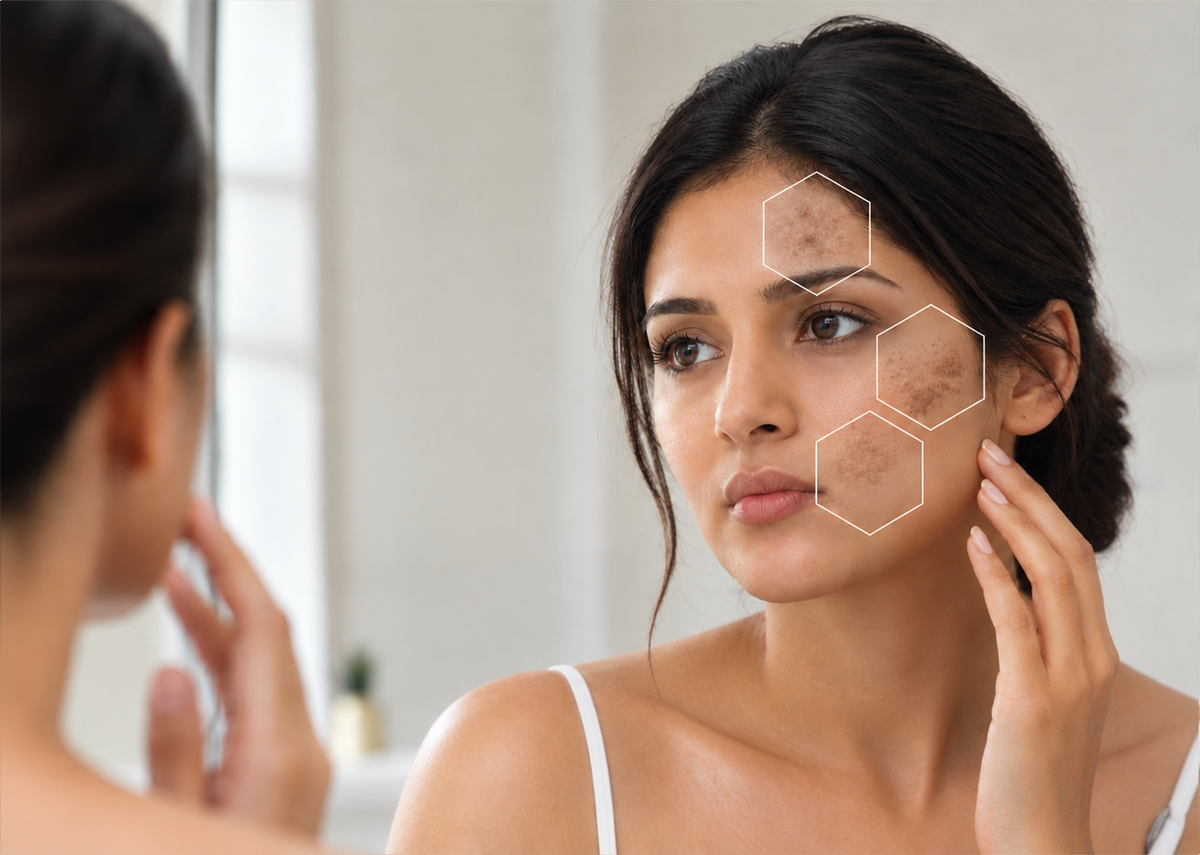
Pigmentation can be one of those skin concerns that looks simple until the reason behind it is considered. A few dark spots after a pimple are not quite the same as brown patches across the cheeks, even though both may be called pigmentation.
That is why knowing the types of pigmentation on the face can make skincare a little less confusing. The treatment depends on what caused the colour change in the first place. Sometimes the skin needs gentle care and time. Sometimes it needs a more specific treatment.
What Causes Pigmentation On Face?
Skin can produce more melanin when it is exposed to things like sunlight, hormonal changes, irritation, inflammation, or certain skin conditions. That extra pigment can stay behind even after the original problem has settled.
Sun exposure is a big part of the picture, but it is not always the whole story. Acne, cuts, waxing, harsh skincare products and hormonal changes can all leave darker areas behind.
Melasma And The Brown Patches It Leaves
Melasma usually appears as larger brown or greyish patches, often on the cheeks, forehead, nose or upper lip. It is commonly linked with hormonal changes and sun exposure, and it can be quite stubborn.
This is where melasma vs hyperpigmentation becomes worth understanding. Melasma is a specific type of pigmentation, while hyperpigmentation is a broader term for areas of skin that have become darker than the surrounding skin.
Treatment usually starts with protecting the skin from the sun every day. Depending on how noticeable it is, a dermatologist may also suggest creams, peels or other treatments. Trying too many strong products at once can actually make things worse.
Post-Acne Pigmentation Needs Patience
Those brown marks left behind after acne are usually called post-inflammatory hyperpigmentation. The spot may be gone, but the darker colour can hang around for weeks or months.
Good skincare here is less about scrubbing the mark away and more about avoiding fresh irritation. Gentle cleansing, sunscreen and ingredients that support a more even-looking skin tone can help over time.
For people looking for post inflammatory hyperpigmentation treatment, the right option depends on how deep and widespread the pigmentation is. Persistent marks may need professional treatment rather than simply adding more products at home.
Sunspots And Uneven Skin Tone
Sun-related pigmentation often shows up as small brown spots on areas that regularly see sunlight, such as the face, forehead and hands. They can become more noticeable with age and continued sun exposure.
The first step is fairly unglamorous but important: daily sun protection. Brightening ingredients can help improve the appearance of uneven tone, but constantly exposing the skin to UV rays can keep bringing the problem back.
At this stage, keeping the routine simple can make more sense than collecting several brightening products. Prismos Beauty can fit into that kind of everyday routine when gentle cleansing is needed alongside skincare aimed at dull and uneven-looking skin.
Pigmentation After Skin Irritation
Not every dark patch starts with acne. Sometimes pigmentation follows irritation from waxing, shaving, burns, cuts, rashes or a product that did not suit the skin.
The sensible approach is to calm the irritation first. Once the skin has settled, gentle brightening ingredients can be introduced slowly. Strong exfoliation on already irritated skin is usually not a great idea.
This is also why choosing a facewash for pigmented skin should not mean choosing the strongest cleanser available. A cleanser that leaves the face tight or uncomfortable may simply add another source of irritation.
When Pigmentation Looks More Like Dullness
Sometimes there are no obvious dark spots at all. The skin simply looks tired, uneven or less bright than it used to. Pollution, excess oil, dead skin cells and everyday environmental exposure can all contribute to that appearance.
In this case, a gentle cleanser with ingredients that support brighter-looking and smoother skin can be a useful starting point. It will not magically erase pigmentation, but it can help keep the skin clean while fitting into a wider routine.
At Prismos Beauty, We Keep Daily Cleansing Simple
At Prismos Beauty, we created Pearl Tone Face Wash for skin that looks dull, uneven or tired after everyday exposure to pollution and stress. We use Glutathione, Niacinamide, Ethyl Ascorbic Acid, Liquorice Extract and AHAs to cleanse away dirt, excess oil, makeup residue and impurities while helping the skin look brighter and more even. The formula is made for all skin types and is gentle enough for everyday use.
We also include Vitamin E and D-Panthenol to help the skin feel soft and comfortable after cleansing. We suggest massaging a small amount onto wet skin for 30–60 seconds, rinsing well and following with moisturiser. It can be used morning and evening as part of a simple routine.
Choosing Treatment Based On The Cause
There is no single pigmentation treatment that works in exactly the same way for everyone. A few acne marks may need patience and gentle care, while melasma or stubborn sunspots may need help from a dermatologist.
The everyday basics still matter, though. Gentle cleansing, moisturising and proper sun protection give the skin a better chance to settle. Brightening ingredients such as niacinamide, vitamin C, liquorice and glutathione can also be useful depending on the concern and the overall routine.
At Prismos Beauty, the focus is on making cleansing one manageable part of that routine, rather than treating a face wash as a complete solution for every pigmentation concern.
Final Words
Pigmentation is not really one problem with one answer. A dark mark after acne, a hormonal patch and a sunspot may look similar at first glance, but they can behave very differently.
So before reaching for the strongest brightening product, it helps to look at when the pigmentation appeared and what may have triggered it. Gentle daily care, sun protection and the right treatment for the specific type can make the whole process much less confusing. And sometimes, the best progress is simply giving the skin enough time to respond.